
Gems from Thomas Petit (Growth Consultant) in MobileDevMemo Mailbag #8
Hi, fellow growth practitioner!
Long time no talk. I’m back!
And this week, I’m bringing you insights on Acquisition, Onboarding, and Monetization.
🥇 TOP GEM OF THE WEEK
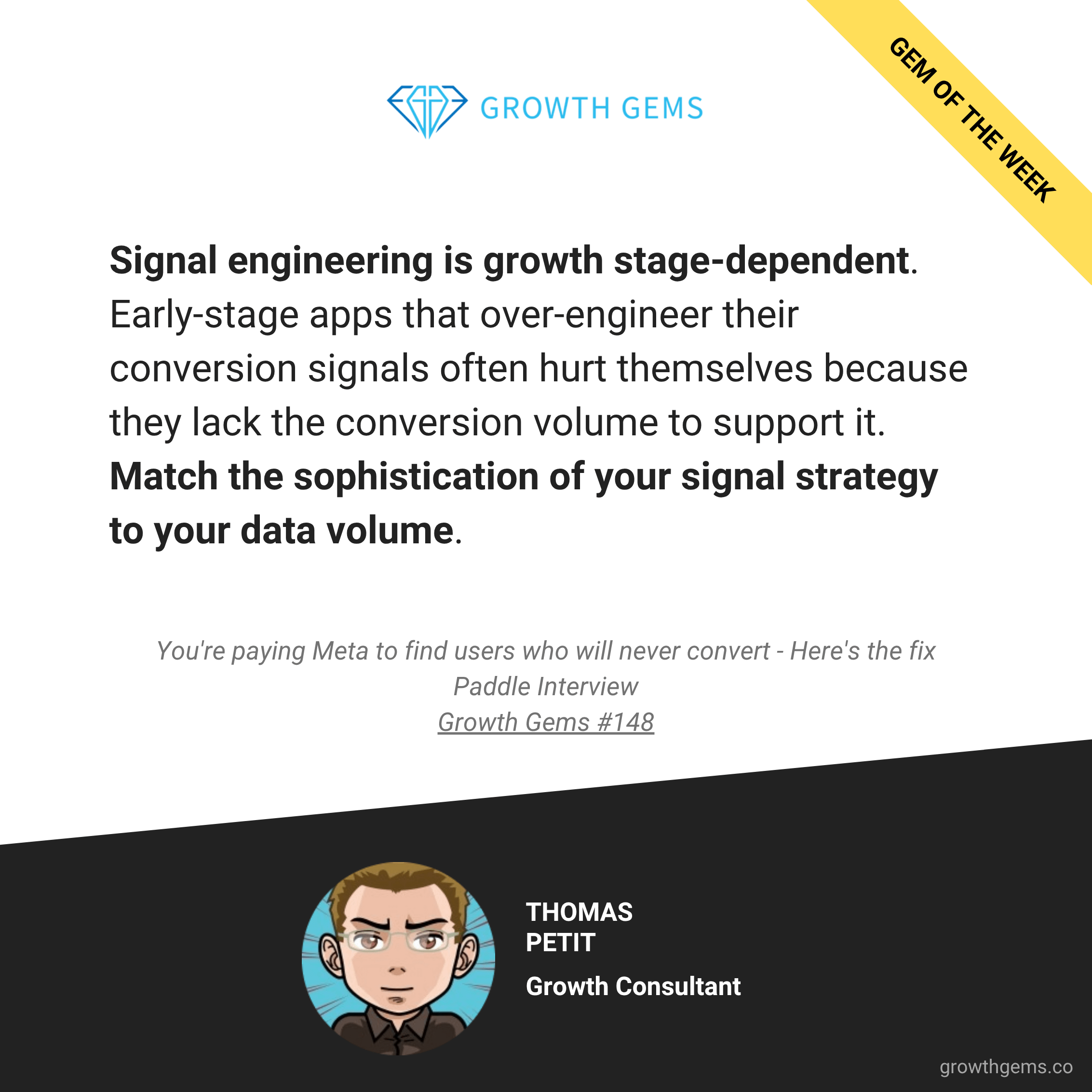
Thomas has shaped so much of my understanding of growth that I literally consume all the content he shares or is featured in.
So here we go again!
SPONSORED RESOURCE
Come join consumer app founders and growth practitioners on the opening night of New York App Week for tacos (Los Tacos no1), drinks, and the best growth insights!
Growth Gems & Screw-Ups is not your typical meetup/event.
Two boards, both powered by attendees:
The best growth insights 💎
The biggest screw-ups (anonymous) 💸
You submit, you vote, and the top of each gets read out at the end of the night. No panel, no slides.
It's free, capacity is limited, and registrations are approved one by one.
Graciously sponsored by RevenueCat.
(You can’t make it but would love to get the insights & screw-ups? Reply and I’ll see what I can do)
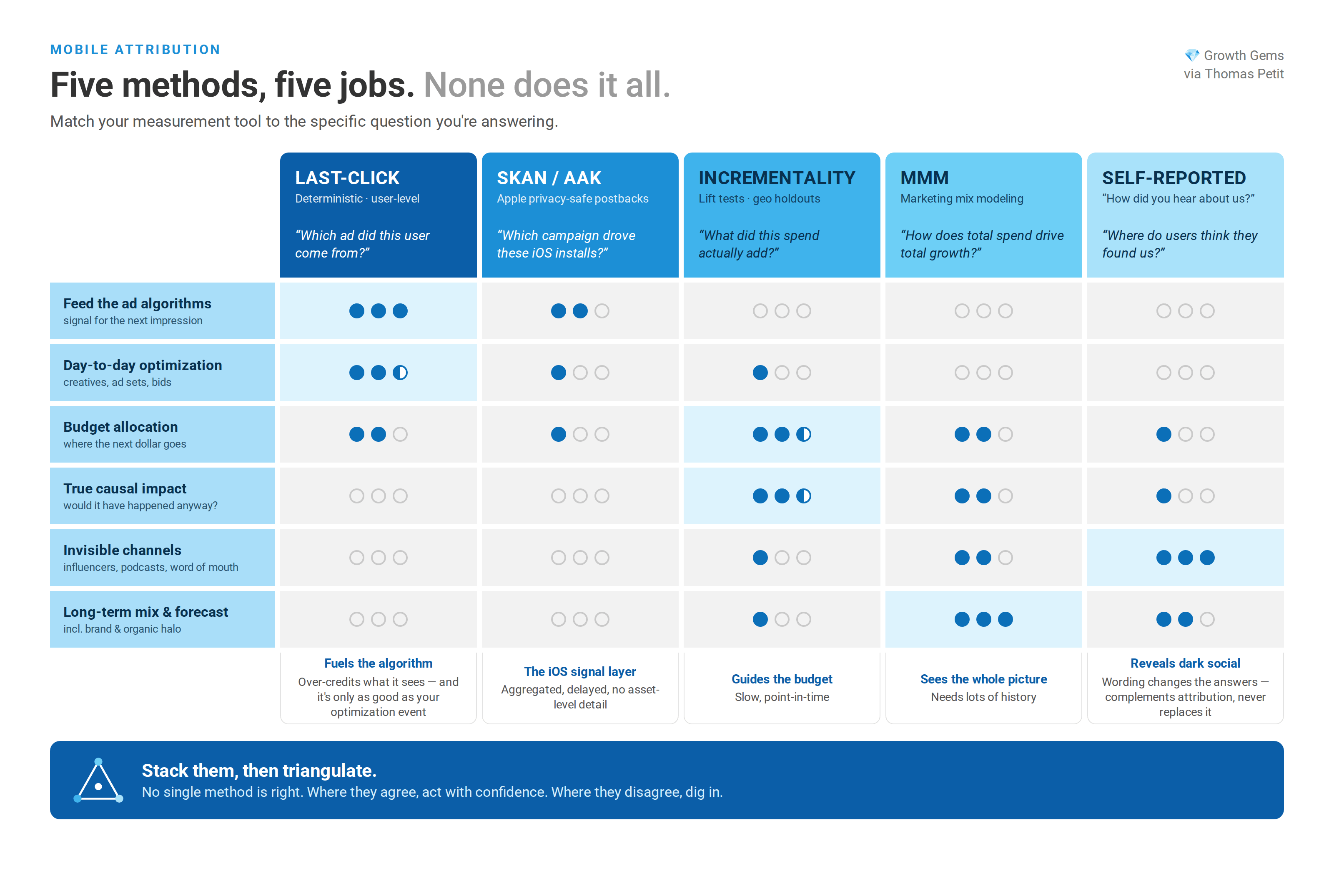
💎 Treat incrementality as essential but not a replacement for deterministic, user-level attribution. You need last-click signals to feed the ad auctions and drive the next impression, while incrementality guides your budget allocation. Pile several methods together (last-click, incrementality, MMM) because no single method is right, but you form a better opinion by triangulating.
(03:43)
Here’s a Claude attempt on expanding and visualizing this.
💎 Fraud that is large enough to hurt you shows up as non-incremental conversions in incrementality tests or geo tests, so if a channel is largely fraud you'll see it without knowing the exact technique. Fighting fraud on technicalities costs more effort than it's worth because fraudsters always find the next method first.
(13:05)
That’s a relief haha.
💎 Stop counting ads and start counting concepts. Launching a thousand near-identical variants is really launching only a handful of ads, which is pointless. The real bottleneck is generating genuinely new concepts, messaging, and niche audience angles (younger, older, gender, player type), not raw volume of close clones.
(16:13)
Agreed. The representation below was an interesting way to think about finding and exploiting concepts (LinkedIn post by Curtis Howland), although I don’t love that it mixes messaging angles and formats.
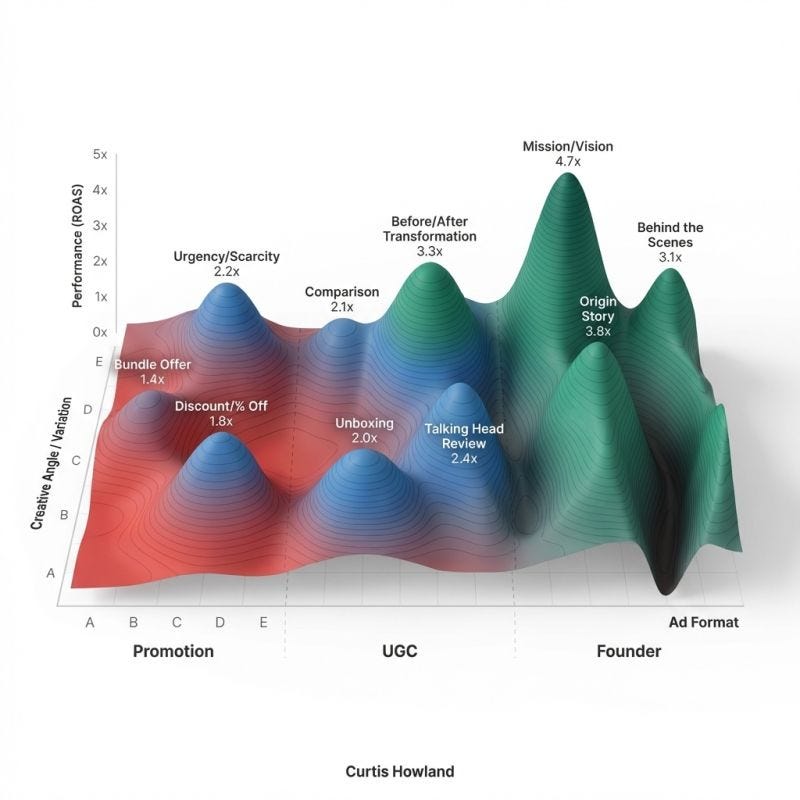
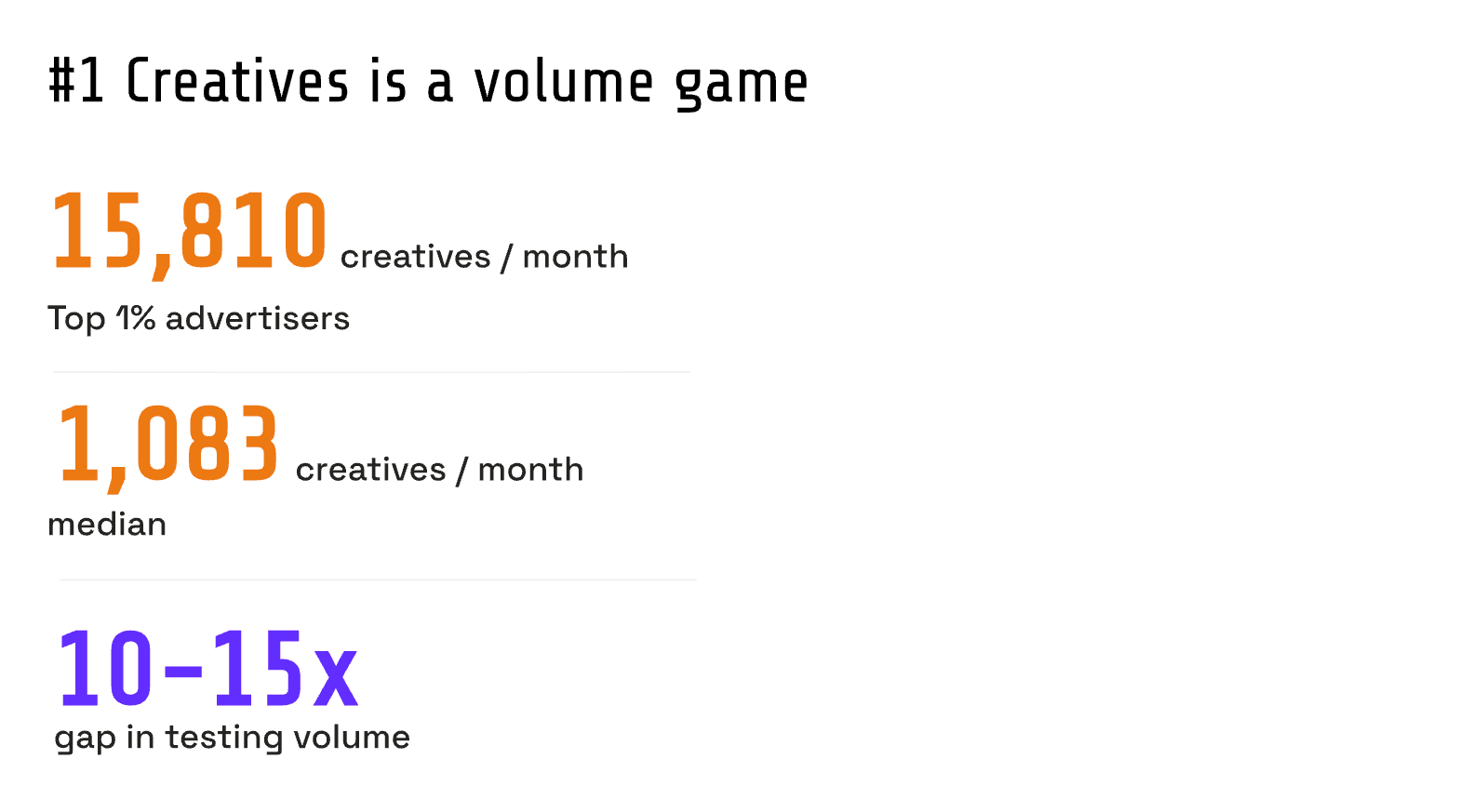
Anyway, it’s still easy to fill behind on volume when you see a slide like this:
💎 When auditing an acquisition account, start by checking the conversion signal flowing into the platform (Meta Events Manager, Google conversion tools) before you open the ads dashboard. There's almost always a mess there: duplicates, bizarre event names, or optimizing toward the wrong conversion. What the platform needs to operate and what you're trying to achieve are two different things, so don't conflate them into one signal.
(17:59)
💎 When you take over an account, hunt for the blunder first and focus on the one or two biggest-spend channels rather than the small 2% channel. Fixing an obvious mistake early delivers an instant win, builds credibility and trust, and buys you the runway to work on the harder, three-month wins. Almost every poorly-managed account has such a blunder waiting.
(19:54)
For our consultant friends ;)
💎 For zero-to-5K stage apps, use TikTok organic as your free angle-discovery lab because a fresh account can post 50 videos and TikTok will surface the good one. Find the message and hook that resonates organically first, then put paid money behind it, ideally on Meta whose algorithm quickly finds who's interested in your product with less volume required.
(24:59)
Thomas shared too many people arrive on Meta with two mediocre videos and torch their entire budget in creative testing; doing a little organic legwork first tells you which hook is catching attention.
💎 Once an AI tool is good enough for a repeatable niche task like voiceover, translating a winning creative into 12 languages, or scripting, stop chasing the cutting-edge model. A 5-10% quality gain is worthless when a proven, cheap process already satisfies the need; lock it in and reinvest the time elsewhere until you're forced to change.
(34:53)
💎 Decide between web-to-app and direct-to-store based on “time-to-aha” and the type of users you’re trying to reach, not on saving payment fees.
Apps that deliver an instant wow moment (games, photo/video editors, simple utilities) are hard to move to the web.
Apps needing warm-up, explanation, or longer onboarding (health & fitness, education, dating, fintech) benefit from a web flow because the App Store page is a terrible place to sell complex value.
(36:53)
Here is the same thing explained slightly differently by Cristian Rotari in his presentation.
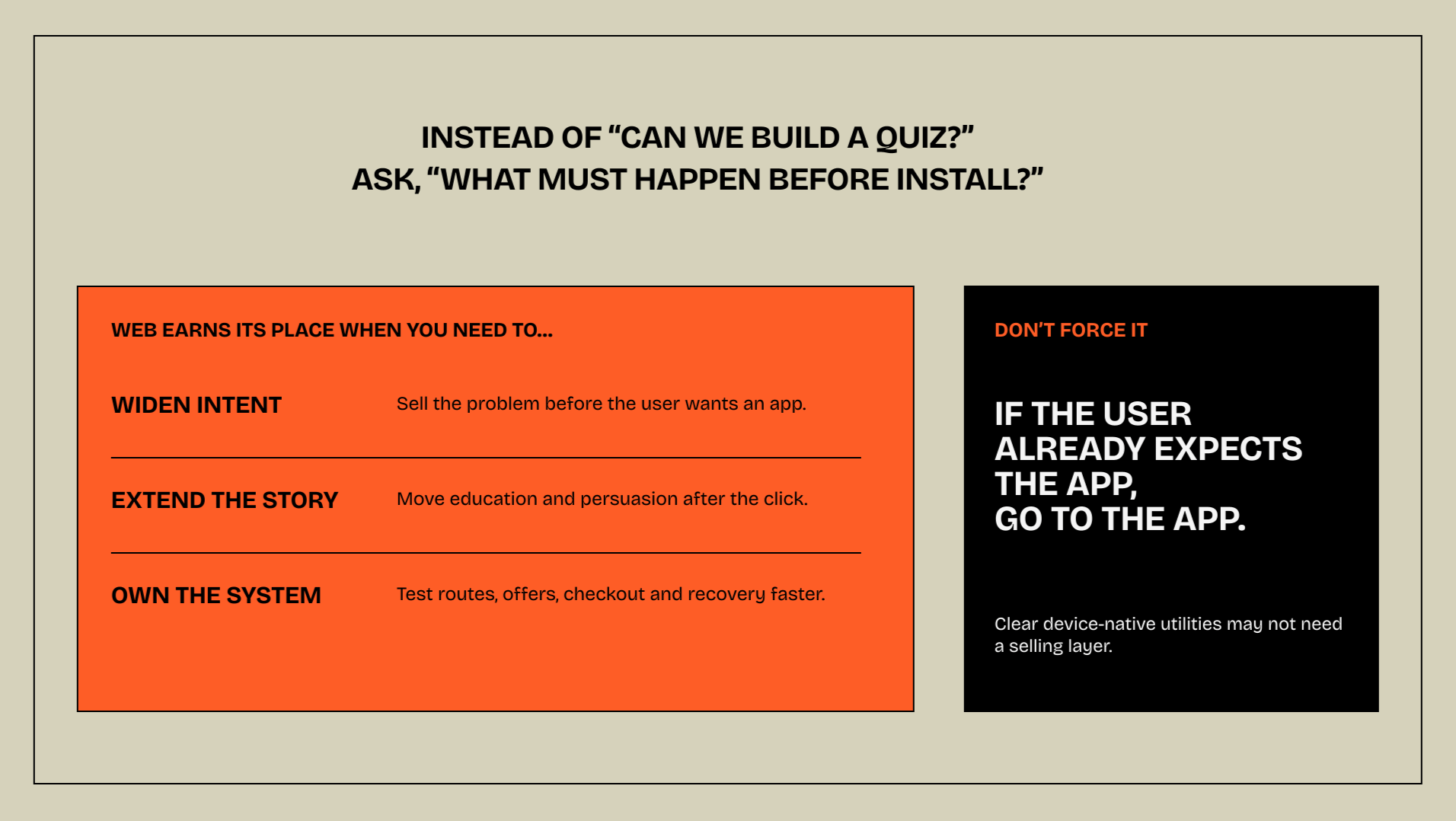
Thomas said that in an ideal world his acquisition would go half to the web and half direct-to-store to reduce dependencies.
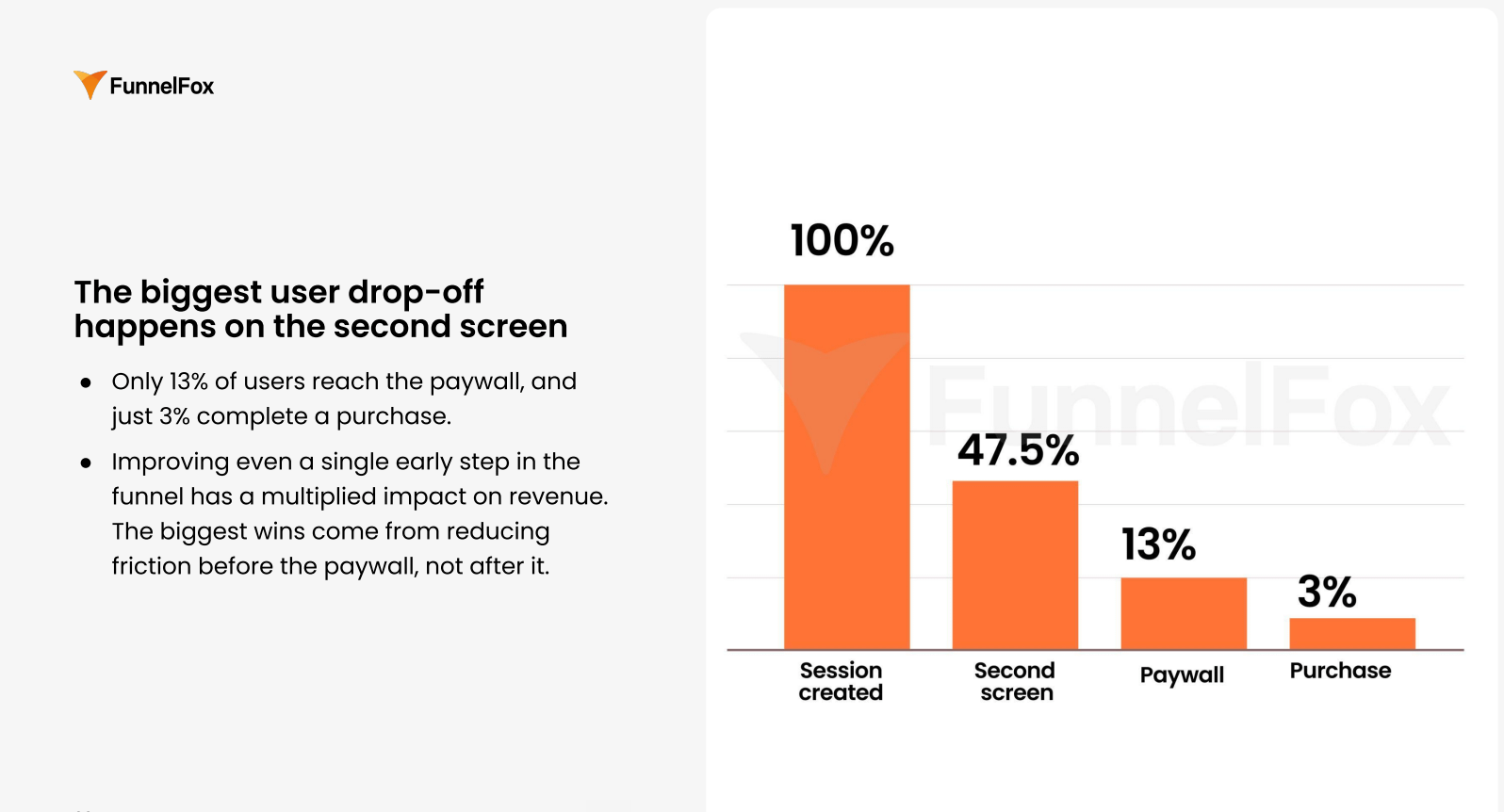
💎 If bounce rate on the first step of your web funnel is dramatically higher (80-85%) than 50% then fix that page. Otherwise, focus on rising intent throughout the flow up until the paywall, and not on getting as many people as possible to the paywall.
(38:36)
Be careful of benchmarks and keep in mind this also depends on your acquisition mix.
That said, here is one (courtesy of FunnelFox’s State of Web2App 2026):
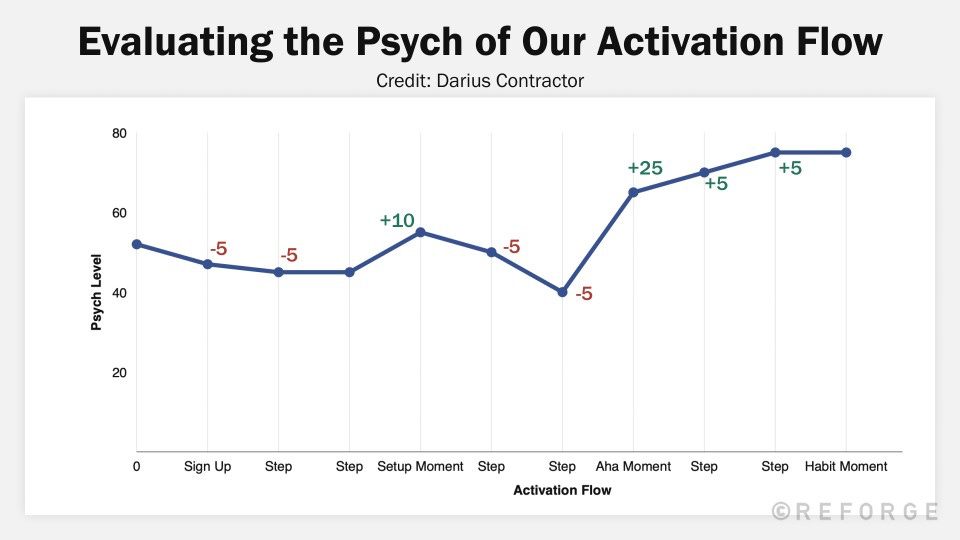
💎 Looking at the intermediary step drop-off can be misleading because a screen might still create fatigue without generating drop-off. Design your onboarding flow using the 'psych' framework where every action either adds or removes user energy. Convert plain questions into reinforcement moments, progress curves that go up, and social proof so users increasingly believe your product will solve their need by the time they hit the paywall.
(40:34)
Here is a must-read article on this Darius Contractor’s psych’d framework as well as an old-ish template to evaluate yours.
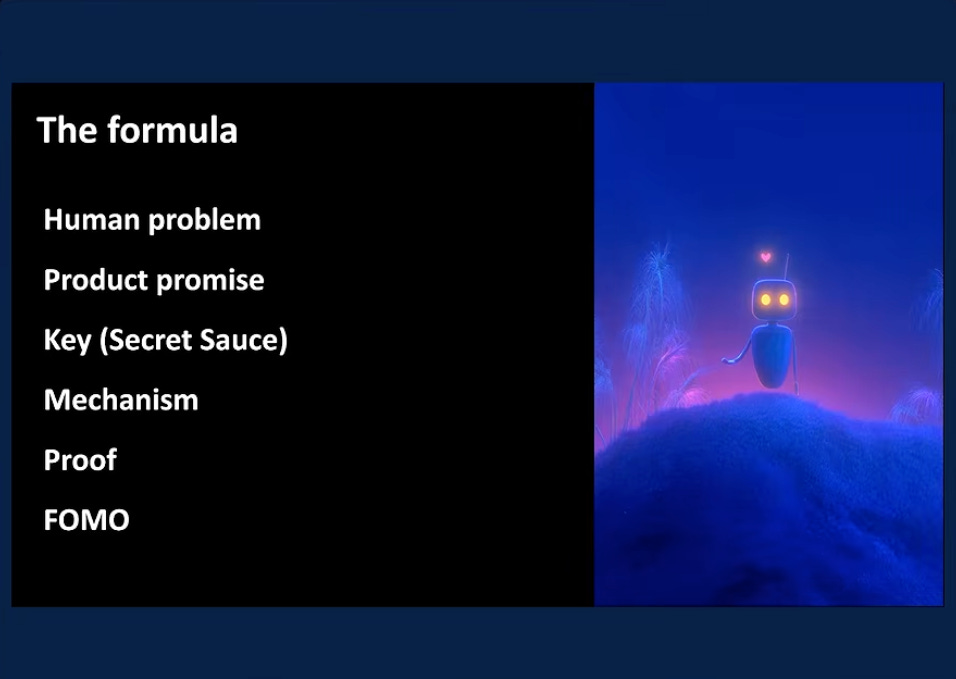
I also recently spotted the two onboarding frameworks below.
The first one is by Ihar Koshaleu on LinkedIn:
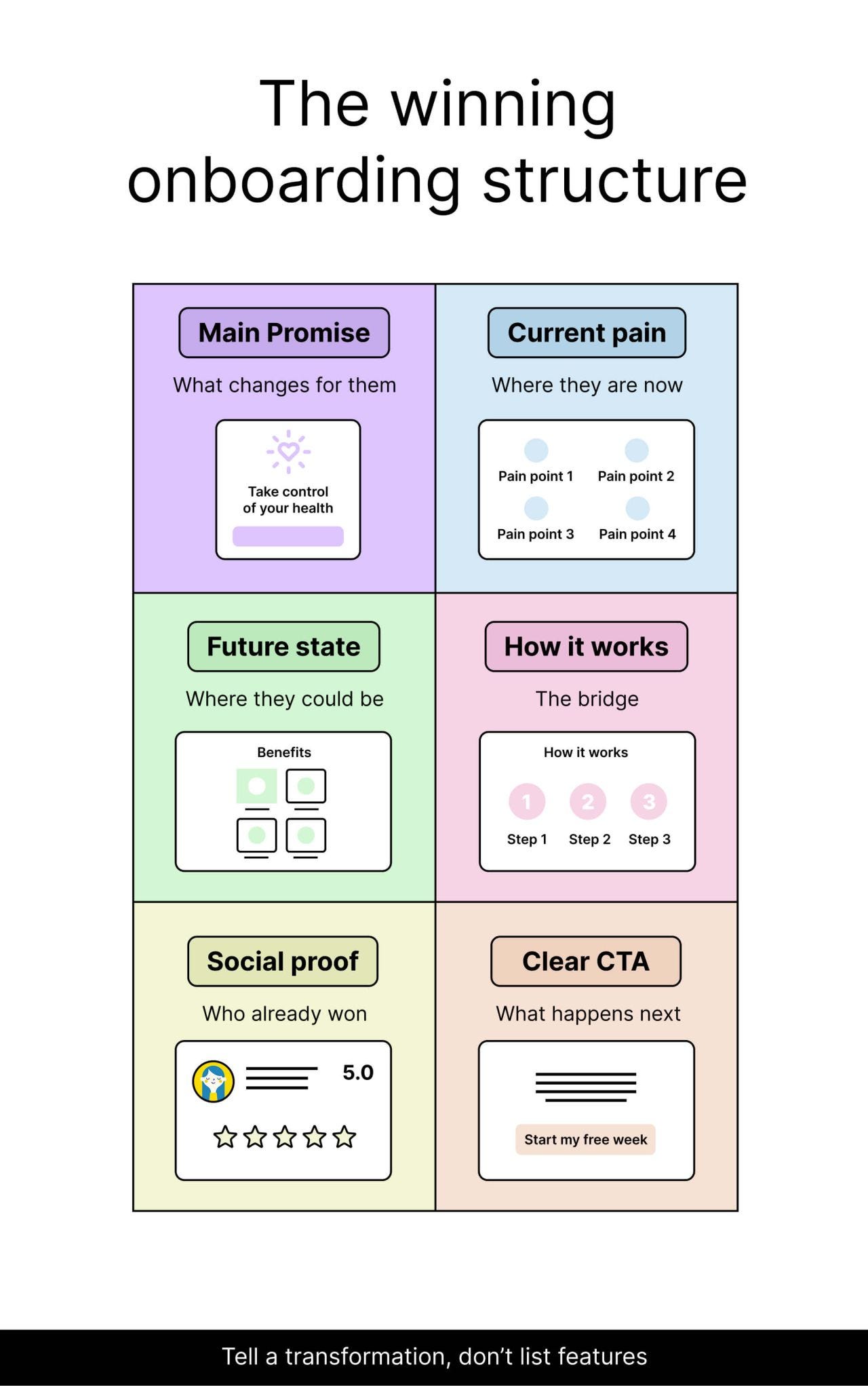
The second Asya Paloni (CPO at Welltory) in this Superwall webinar (here):
💎 A hard paywall that abandons non-payers boosts short-term conversion but will probably increase chargebacks. Offering a 'maybe later' button, a second offer, or letting users download the app anyway captures late conversions, reduces cart-abandonment efforts, and lowers chargebacks, which threaten your standing with merchants.
(41:50)
Thomas was referring to the web here, but I’m curious if this could have its place in a web funnel (even if it’s not the main one).
💎 The real prize of web-to-app is post-purchase upsell flexibility, not fee savings. Immediately after someone subscribes on the web they're in a high-yes state, so present add-ons (PDFs, methods, body scans, supplements) to boost LTV in a way that is difficult or impossible through App Store IAP.
(49:00)
From my experience “real prize” feels a bit overstated (although maybe I haven’t been aggressive enough), but it sure is a nice bonus. Definitely worth it once you reach a certain scale!
A few examples of upsells below. Other web funnel worth checking for more: Promova, Flo, Simple, Headway, etc.
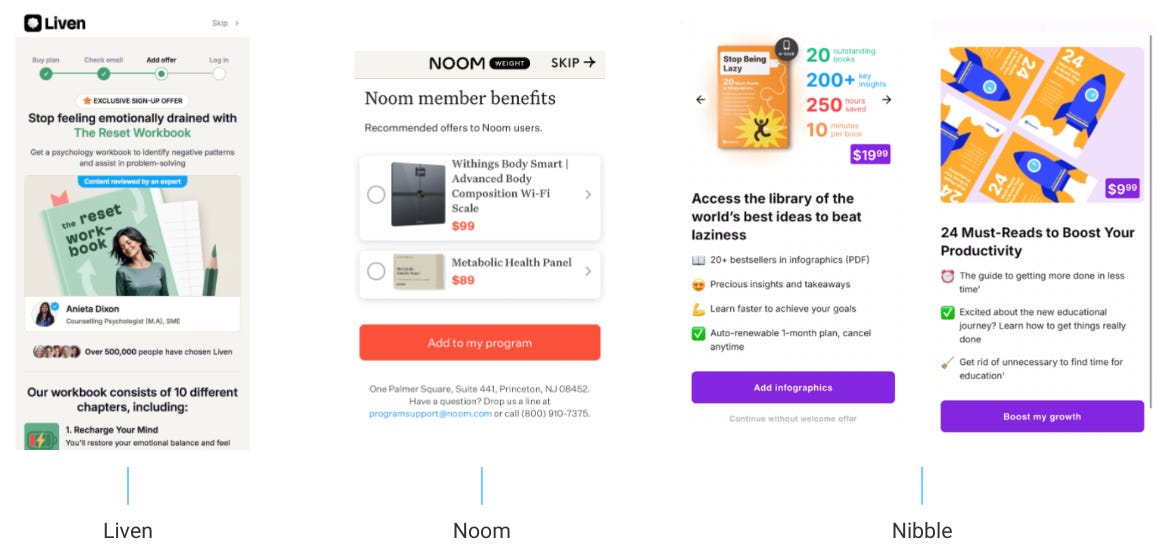
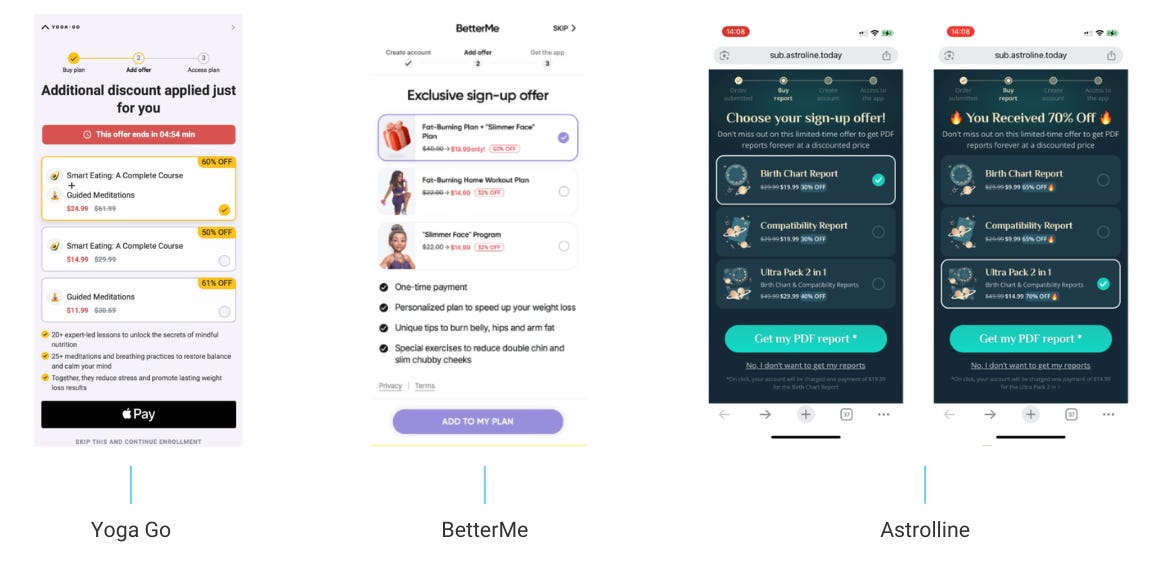
Beyond the additional revenue, upsells can also help with activation and retention because a workbook (or another kind of material) gets people familiar with your value proposition and your brand. Even better if it’s physical when it can become an external trigger to use the app.
There is a line you have to ride, because upsells sit between the purchase and the app download link. So watch the web purchase → login funnel as you add upsells.
💎 Turn cancellations into save opportunities by offering a partial (e.g. half) refund in exchange for keeping the full subscription. A surprisingly large number of users accept, which retains the customer ethically; the web gives you far more flexibility to run these cancellation-save flows than IAP does today.
(49:36)
He did mention Apple is moving closer to that with the Retention Messaging API (if you haven’t yet, request access so it’s available when you get to it).
RevenueCat makes Retention Messaging API super easy to set up (I’m hopeful they’ll add the bullet point capability soon). My advice here:
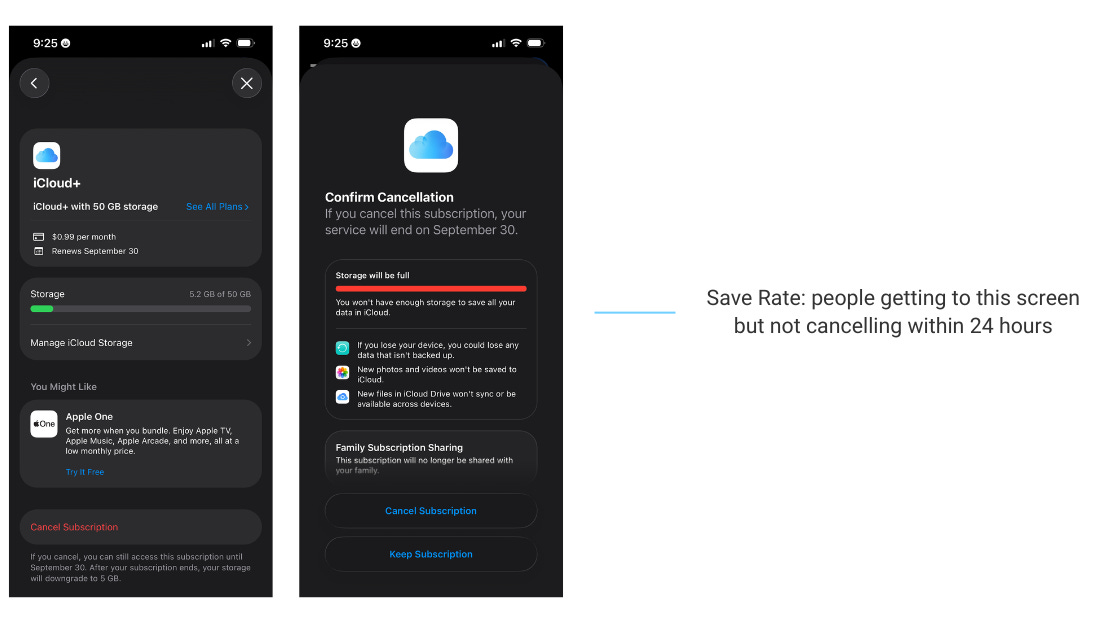
Only add a Default message (no promotional offer) at first to get a baseline on your “Save Rate”: people tapping “Cancel Subscription” from their App Store settings. Keep in mind that even without a message there are already a lot of people getting to that screen and not cancelling
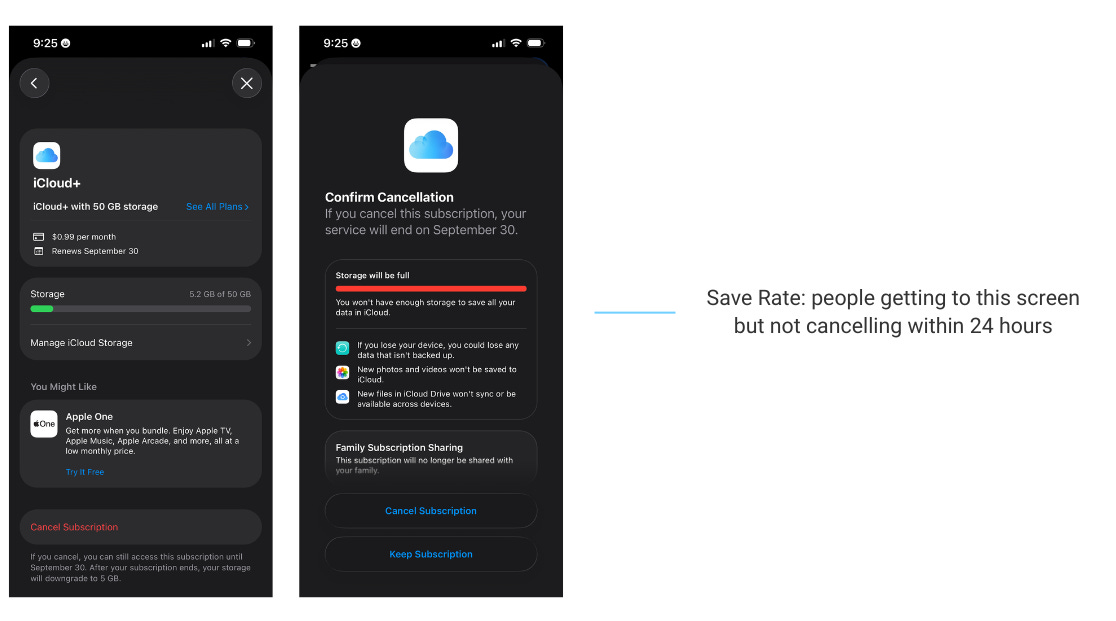
Then, experiment with “promotional messages” (offerings)
💎 Justify web-to-app by the value and merchandising freedom it unlocks, not by fee savings or making unsubscribe harder. Use the extra latitude to deliver a personalized product and stronger value proposition, and that increased value is what overcomes the added friction of a web checkout.
(51:17)

Thomas (and his wonderful shirt) was also recently interviewed at the B2Coast event by Paddle in Thomas Petit: You're paying Meta to find users who will never convert - Here's the fix
Below some bonus gems!
💎 Be extremely cautious using LLMs for data analysis: they tend to tell you what you want to hear, which is dangerous when you're making growth decisions. Keep a layer of human judgment on top of AI-generated insights rather than trusting them blindly.
(03:53)
It’s also a pain to be on the receiving end of an LLM slop analysis…
💎 The next big gains from AI won't come from a single better model; they'll come from connecting your siloed agents (creative, data analysis, alerts, churn prediction) so they learn from each other. For example, a paywall-test agent should know when a weekend brought in poor-quality discarded traffic. Most organizations keep these agents siloed, so getting them to work together is where the near-term edge lives.
(04:29)
💎 Meta optimizes toward exactly the event you ask for, and it will fill that event with the cheapest users who won't go further. Optimize for free trials and you'll get trial-starters who churn before paying. This is why the conversion signal you send, not just budget and creative, is one of the three real levers of paid acquisition.
(12:33)
This may sound like a broken record but I keep seeing it over an over.
💎 Engineer the conversion signal you send back to the ad network so it optimizes for high-value users, not just trial-starters. Use onboarding behavior, device, and answer patterns to identify users likely to retain, refer, or convert later; even users who haven't started a trial yet can be a more valuable signal than raw free-trial counts.
(12:59)
Another big plus of web funnels: purchase optimization (or even pLTV optimization) moves you much closer to what you actually want.
💎 Signal engineering is growth stage-dependent. Early-stage apps that over-engineer their conversion signals often hurt themselves because they lack the conversion volume to support it. Match the sophistication of your signal strategy to your data volume.
(14:34)
💎 Conversion-signal tests can be extremely expensive because a wrong signal not only wastes campaign spend but poisons platform learning for weeks or months. This is exactly where predictive AI beats human data teams: use AI for predictive signal modeling, but don't run infinite AI-driven live signal tests just because you can.
(16:13)
💎 AI only learns from what already worked in the past, so it's great at copying and testing proven patterns but can't generate the counterintuitive, risky breakthrough that everyone later copies. Keep human product vision on top of AI: use AI to prioritize and deploy tests, but rely on people for the original spark that puts you at the forefront.
(17:26)
💎 Early-stage apps should pick one monetization path (IAP or web) and go all in rather than splitting focus. You don't have the traffic to properly test both, and premature testing distracts from bigger, higher-uplift opportunities. Add the second path once your cohorts are larger and your product has matured.
(19:05)
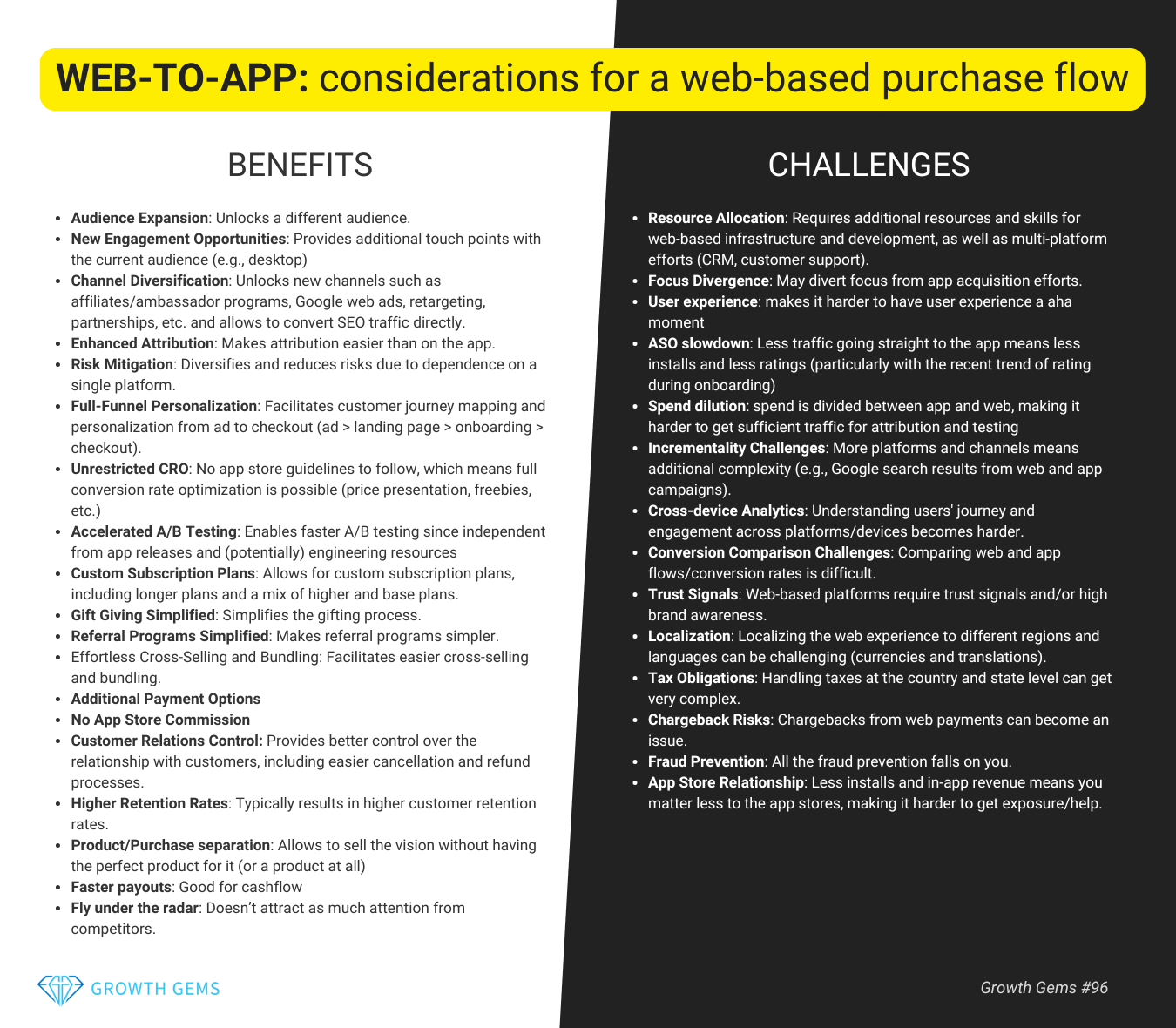
I’ll plug in my own LinkedIn post and deeper comparison of web2app (as in, web-based purchase flow):
💎 The App Store commission hurts far less on low-ticket purchases, where adding an extra web checkout step can cost more conversion than the commission saves. For low-value or consumable, non-renewing purchases (like a small add-on feature), keep it in IAP rather than pushing users to web.
(19:35)
Thomas also mentioned that going web-to-app is far more than a 30% vs 5% commission swap; you must account for conversion rate, chargebacks, renewals, paid trials, and routing users back to the app. If you're not equipped to deploy it properly, web payments will likely be a net negative and a time sink against bigger opportunities.
See you next time.
Stay curious!
— Sylvain
Chief Insights Miner at Growth Gems ⛏️
(Fractional) Head of Growth at Reading.com
Growth Consultant/Advisor for high-potential subscription apps
Now also growing my own app
🔗 Source:
The gem about Meta filling exactly the event you ask for with the cheapest users who won't go further is the one I keep explaining to founders. The version I've seen work: if trial volume is high enough, optimize for trials but send a predicted-value signal so Meta can tell a likely payer from a trial collector. If volume is low, moving to a later event mostly starves the algorithm. Would love a future gem on where teams draw that volume line.
Great newsletter, as always. Really like the two models for what onboarding success looks like, as well as the idea that time-to-aha is key in deciding whether to go for web-to-app versus in-app onboarding.