
Gems from Nick Godwin (Product & Growth at Superwall) in The Secret to App Conversion at Business of Apps NYC.
Hi, fellow growth practitioner!
This week, I’m bringing you insights on Onboarding and Monetization.
🥇 TOP GEM OF THE WEEK

SPONSORED INSIGHT & RESOURCE
As you run pricing experiments, you realize that one-size-fits all pricing is not optimal: you’re optimizing for the biggest minority.
Price higher and you often get higher ARPU because many people are willing to pay more…But you typically lose some volume of active paid new users.
Botsi lets you show the optimal price, product, and paywall to each user.
It works via API on top of your existing stack:
You tell Botsi what price points and paywalls you have
You send Botsi some contextual and behavioral data on new users
Botsi sends back the right paywall to show each user

Put in your email in the form, then Jacob Rushfinn and team will get back to you to schedule the demo.
I couldn’t be at APS NYC, so I had FOMO…
I missed out on the conversations but at least I was able to watch the talks.
This one from Superwall stood out (despite its click-baity title), in particular because of the advice on the kind of experiments you should run and how to maximize impact.
💎 Invest in no-code testing tools and advanced analytics to enable non-technical team members to run growth experiments independently. This removes development bottlenecks and allows testing at the speed of user acquisition rather than engineering sprints.
(03:43)
Of course this plays into Superwall’s narrative. Still, tools that enable rapid experimentation and empower the growth team can be very powerful.
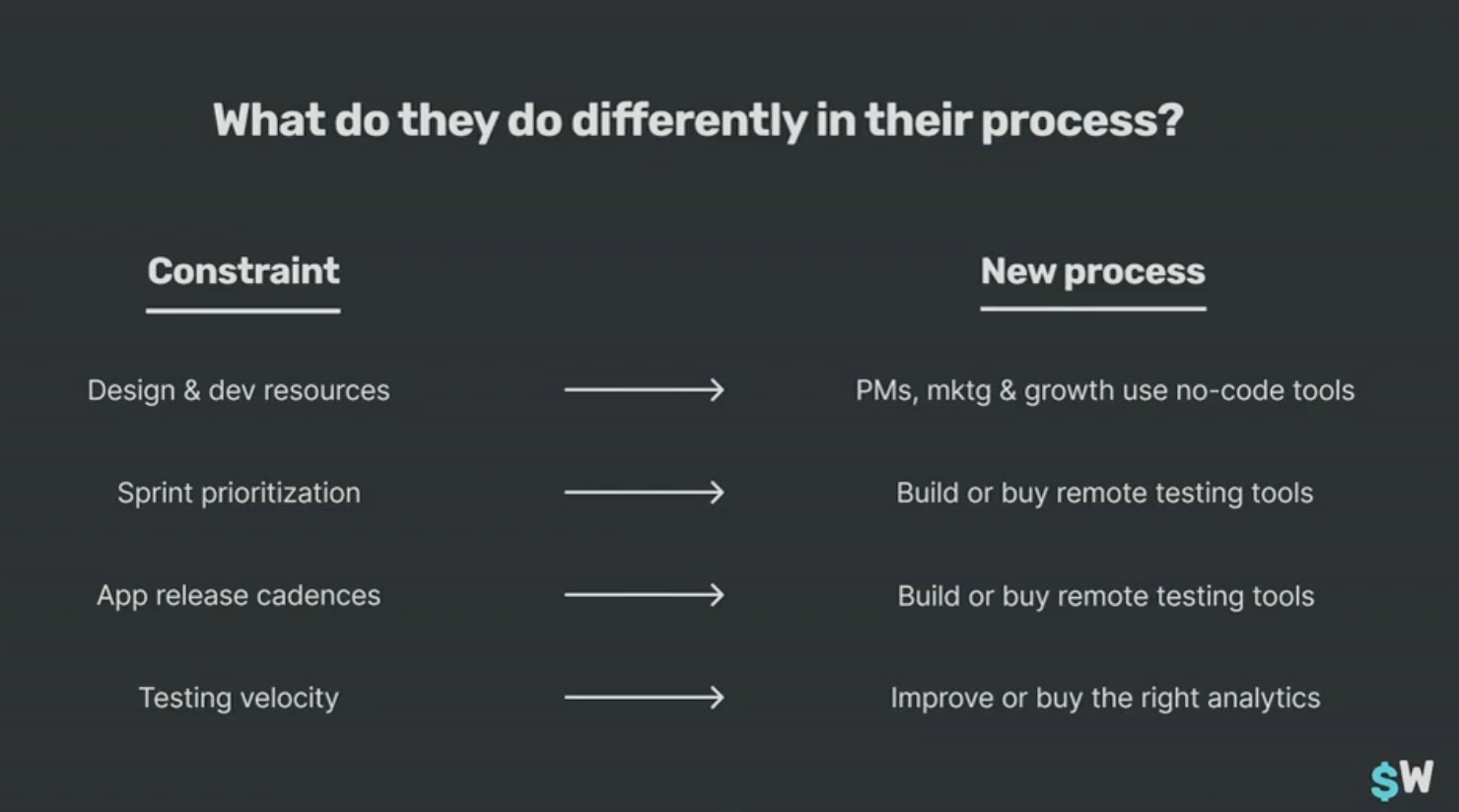
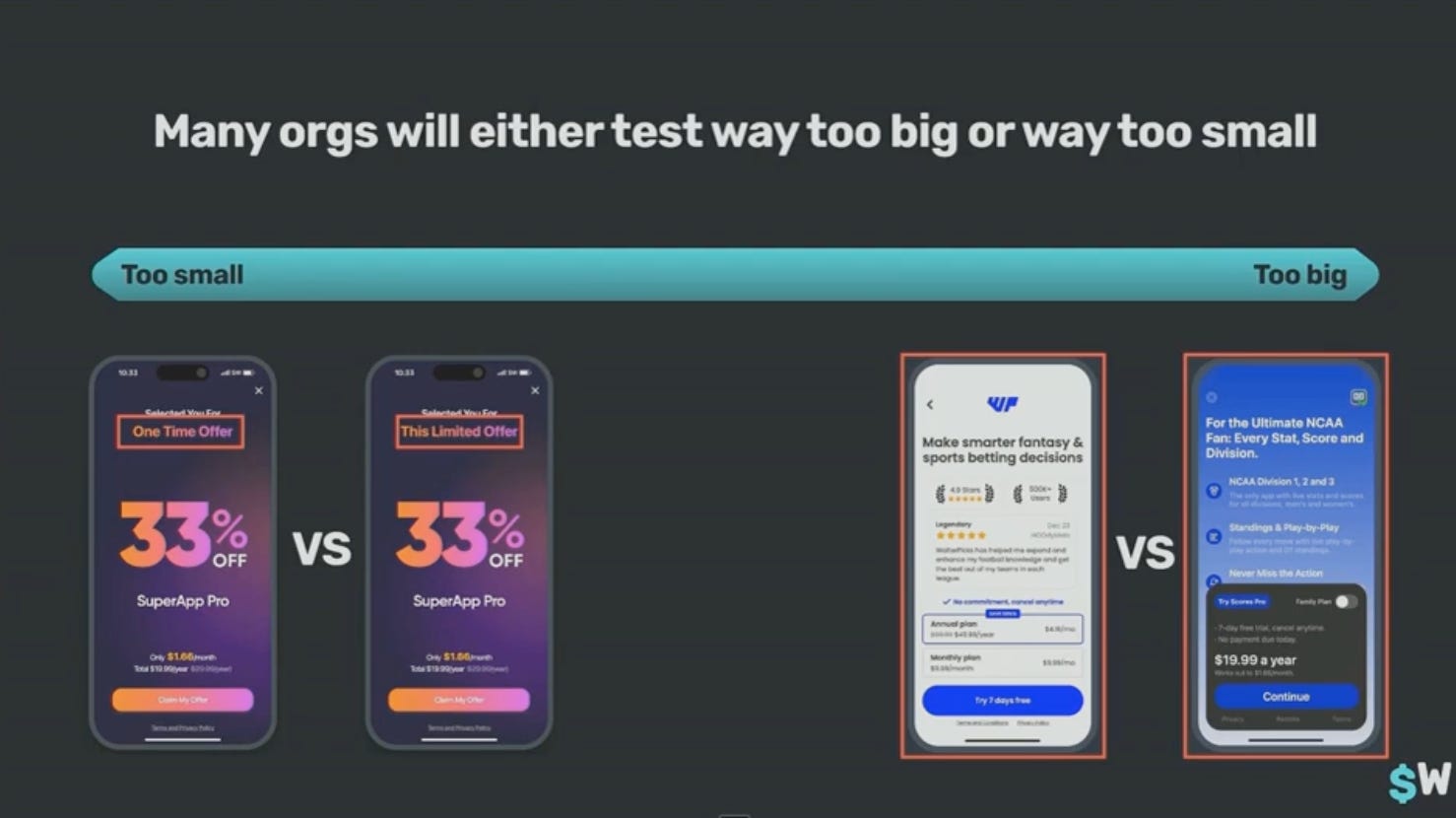
💎 Find the ‘variable sweet spot’ in your growth testing by avoiding tests that are too small (taking months for significance) or too big (making it impossible to identify what drove results). Focus on testing one meaningful change category at a time.
(04:16)
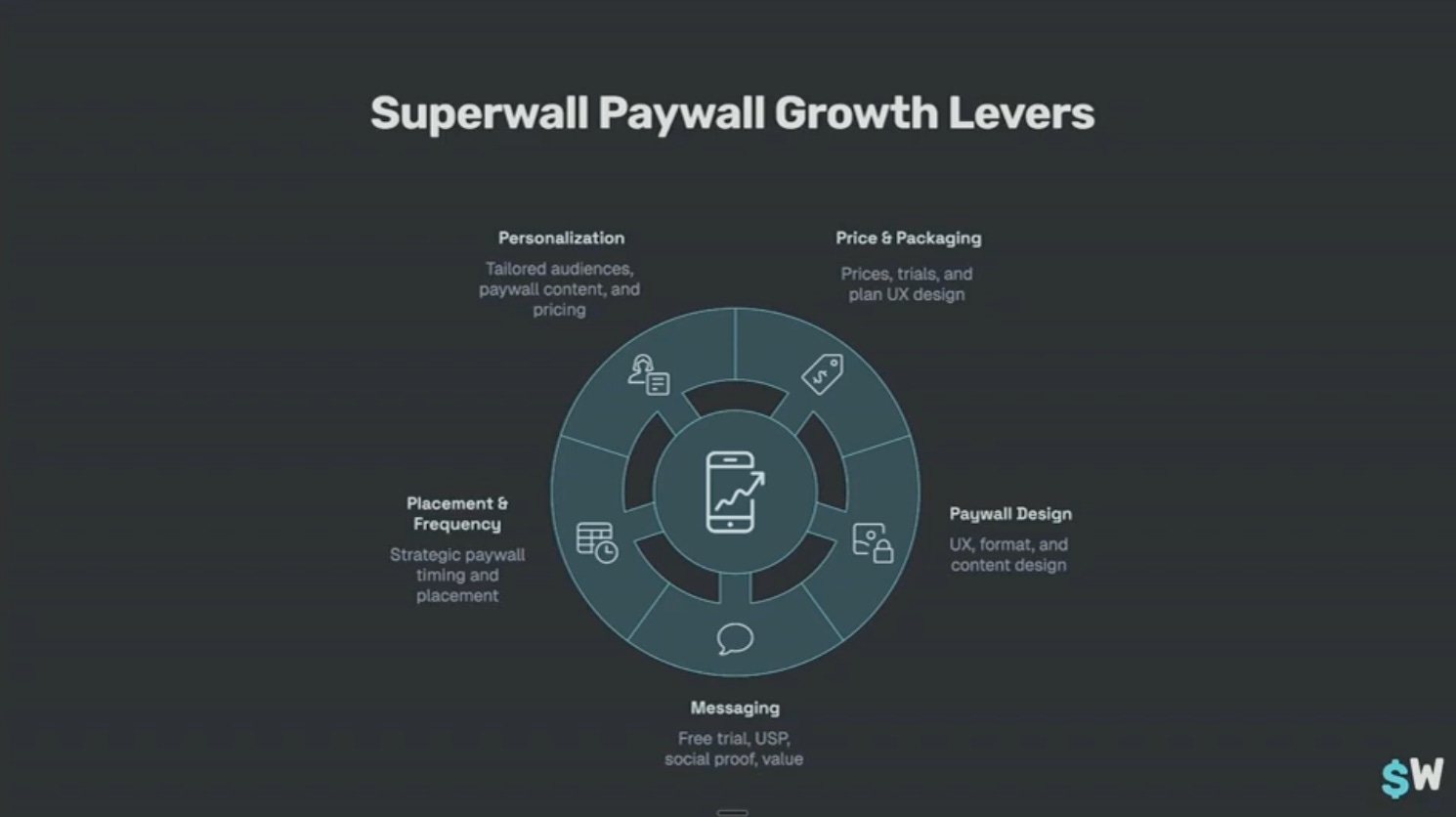
💎 Use a growth lever framework to categorize your tests (pricing, design, messaging, placement, frequency, personalization) and avoid testing across multiple categories simultaneously. This ensures you can isolate what’s driving performance improvements.
(05:03)
I like this. A good way to diversify your bets when planning your paywall tests.
I’ll add that it’s rare for onboarding experiments NOT to impact paywall conversion and revenue...So you need to take that into account as well.
💎 To maximize testing velocity without compromising data integrity:
Ensure test hypotheses are independent
Layer your experiments by starting new tests while waiting for retention data from previous tests to mature
(06:53)
This is great advice, and why prioritization should not just follow “scoring” (e.g. RICE score) which can tie you down in analysis and rollout sequencing.
💎 Retest your pricing every 3-9 months due to rapidly changing consumer behavior and competitive landscape. The AI-driven app development boom is accelerating market changes, making frequent pricing optimization essential for staying competitive.
(08:32)
Recommendation I used to hear was 6-12 months, and maybe this is indeed accelerating.
💎 Implement user-level purchase propensity scoring based on behavioral data (paywall views, time since install, device, location). This allows you to personalize pricing strategies and reveal untapped user segments in order to optimize revenue per user.
(10:49)
Superwall has been testing a Demand Score to determine each user’s purchase power. In the example below, the app converts pretty well (orange) for high purchase power but poorly for the long tail of users with low purchase power.
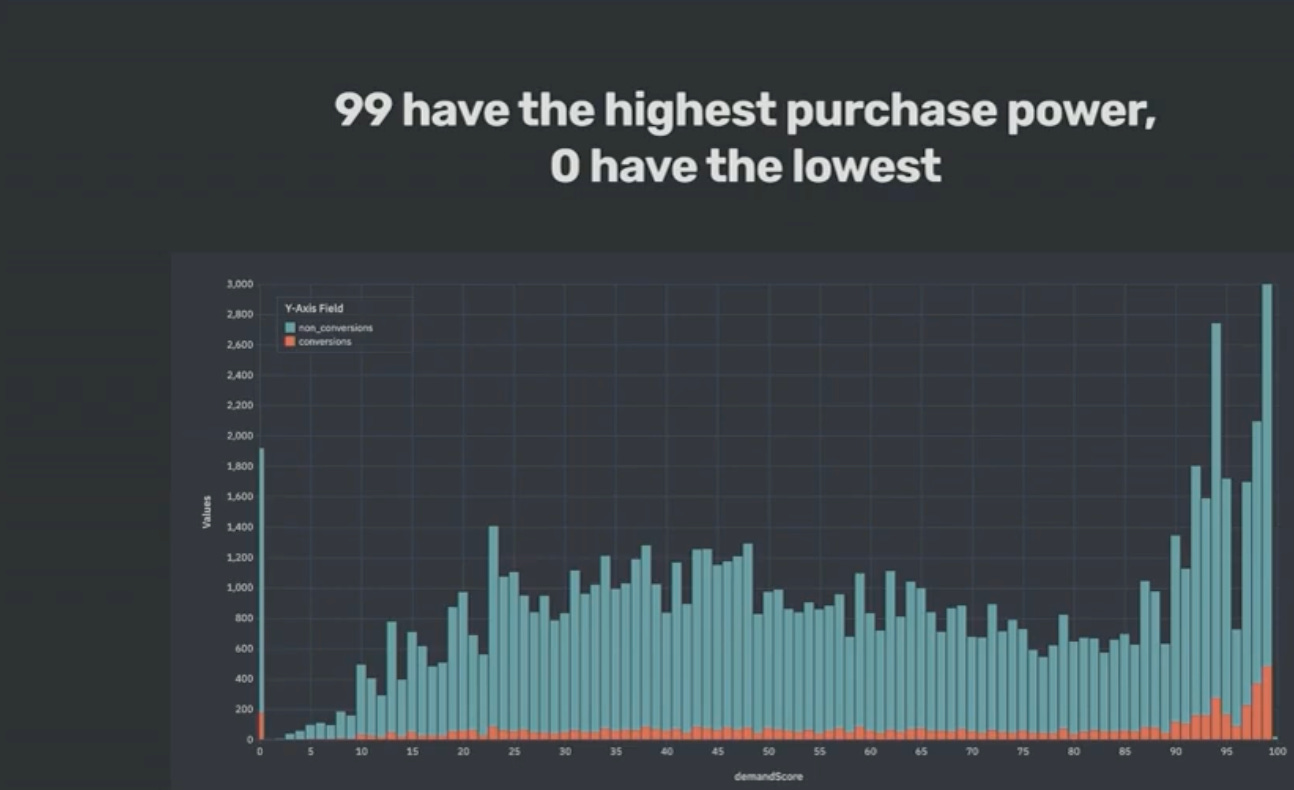
This is the kind of use cases Botsi’s AI Pricing is made for.
stage: growth
💎 In growth phase, choose more users over more revenue so you can build long-term market position.
(13:21)
I’d say it’s not that clearcut. Nick gave a pretty extreme example of +1.85M vs. 38% of total purchase, so that’s a case where the decision is pretty easy (38% is a huge loss…).
There are cases where a small loss in paid users can strategically be accepted if it allows a shorter payback window or higher target CAC (especially if cash flow is tight).
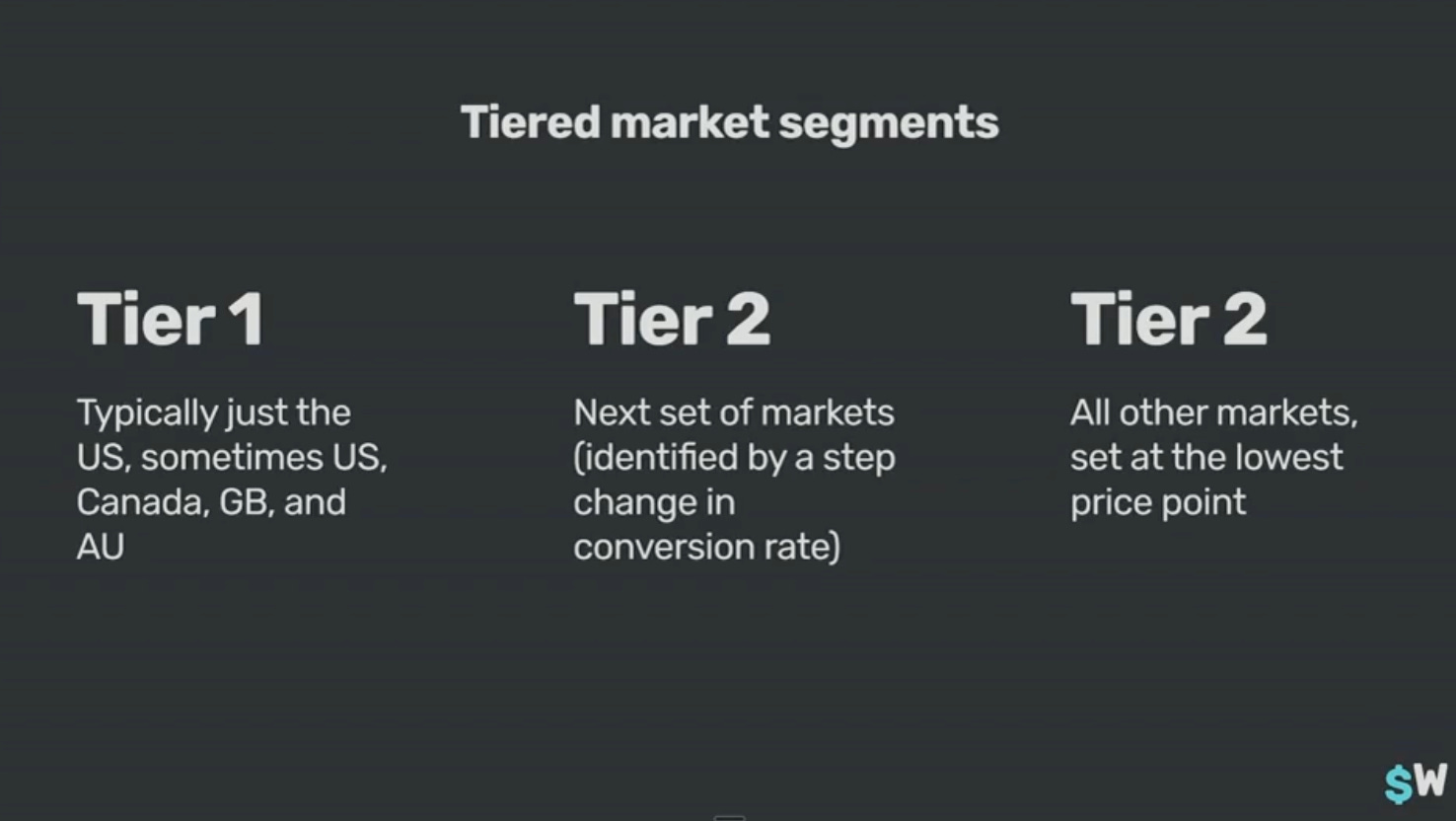
💎 Organize international pricing into tiered market segments based on conversion rate step-changes rather than individual country optimization. This approach dramatically simplifies testing while maintaining pricing efficiency across different market segments.
(14:56)
💎 App-to-web checkout can be profitable even with 42% lower paywall conversion rates due to 27-54 percentage point improvements in trial-to-paid conversion rates. The reduced platform fees can offset significant conversion rate drops while improving overall unit economics.
(36:59) by Albert
If the difference comes mostly from the platform fees, you also end up getting less paid users, so that’s something to consider.
Nick mentioned that if you’re in the small business developer program (15% fee instead of 30%) app2web never pays off.
💎 Implement hybrid checkout strategies by routing high-LTV purchases (annual plans) through app-to-web while keeping low-LTV purchases (monthly) in-app. This optimizes for revenue on valuable customers while minimizing operational complexity for smaller transactions.
(19:27)
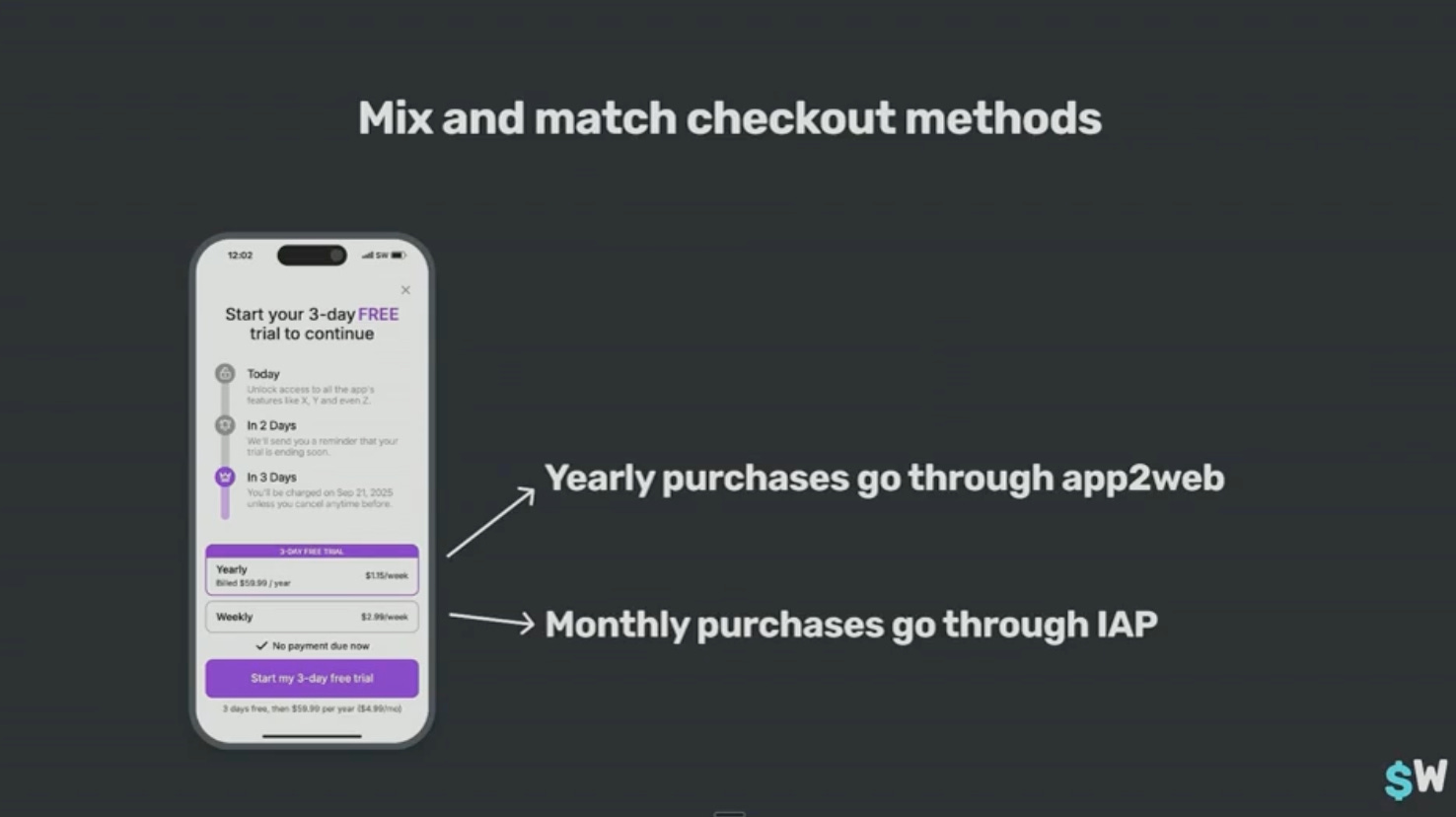
💎 A few ways to leverage app2web from the in-app UX:
Winback campaigns: they paid once, there are chances they’ll go past the friction of web checkout
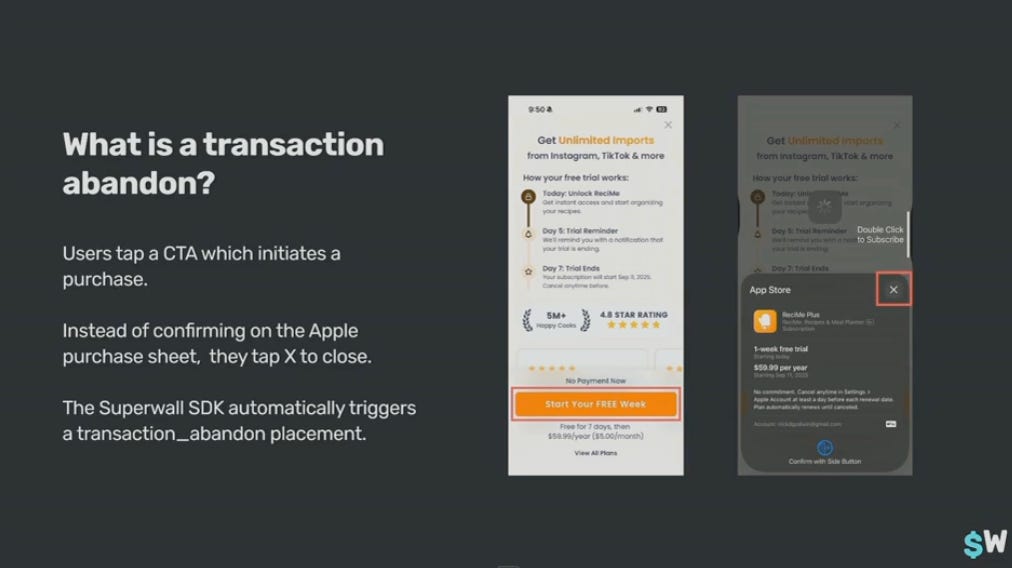
Transaction abandonment offers
Cascading discount offers over time because they can offer a deeper discount given the smaller fee
(19:54)
💎 Recommended tests to experiment with app2web:
Same paywall you have now but send purchase traffic to web checkout
If > 70% of your users purchase annual plans, test only sending those purchases to web checkout
If you collect emails, send an offer when users hit the paywall that links to your app2web funnel
(21:00)
For #3, I’m not sure why it would still be called app2web since you’re sending straight to the web from the email. But I agree that’s a best practice. In fact, I shared a similar gem from Jake Mor back in 2022 👇

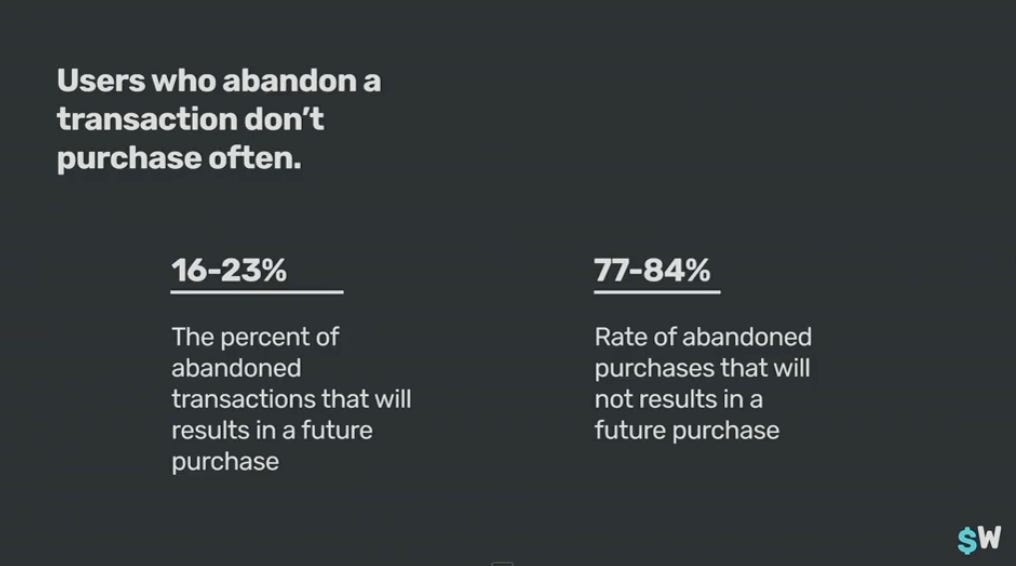
💎 Leverage transaction abandonment campaigns to recover 47-57% of users who start but don’t complete purchases. Since only 16-23% naturally return to buy within 30 days, abandoned users represent a low-risk discount opportunity without cannibalizing full-price conversions.
(23:18)
💎 Use physical experiences or adjacent services to increase subscriber retention. Example: a Health & Fitness sells lab work for blood analysis to provide a health score and follow up actions.
(25:11)
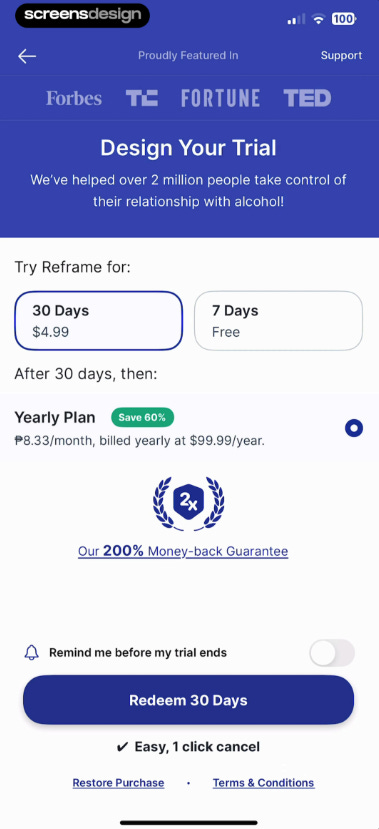
💎 Test paid intro offers alongside free trials by offering users choice between a free 7-day trial and a paid 30-day trial (e.g., $5). This ‘design your trial’ approach increases both initial conversion rates and long-term trial-to-paid conversion by giving users control over their commitment level.
(25:58)
Reframe is one of several apps doing this.

See you next time.
Stay curious!
— Sylvain
Chief Insights Miner at Growth Gems ⛏️
(Fractional) Head of Growth at Reading.com
Growth Consultant/Advisor for high-potential subscription apps
🔗 Source:
The Secret to App Conversion at App Promotion Summit NYC